The Protein Myths That Are Killing Your Gains
Protein is the raw material for muscle growth. Here’s how much you actually need to make progress.
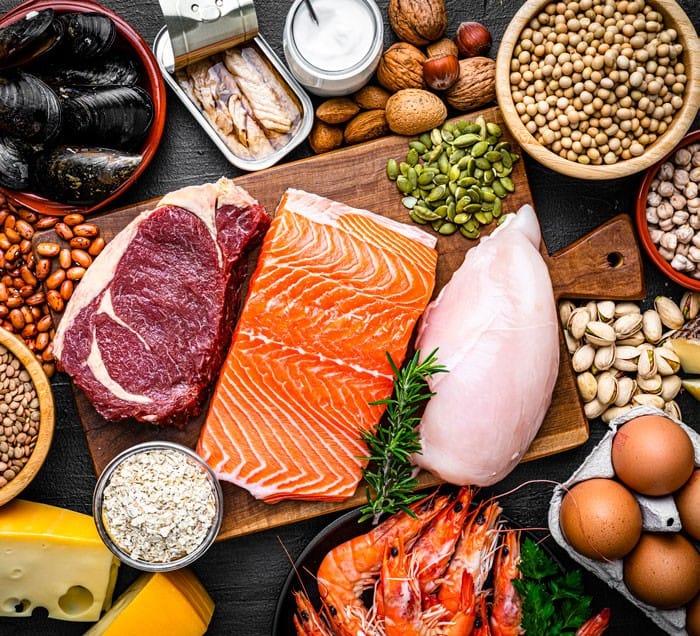
If you've done any research on muscle growth, you've probably heard a hundred different takes on protein.
Some say you need extreme amounts to see optimal growth. Others claim too much protein is harmful.
The truth is somewhere in the middle, and far more useful than any extreme.
When you perform resistance training, you create tiny micro-tears in your muscle tissue. This sends a signal to your body saying, "We need stronger tissue."
In order to repair and build on that muscle tissue, we need amino acids. And what supplies these amino acids? Ding ding, protein.
With sufficient training and protein, a process called muscle protein synthesis happens. When it outweighs the rate of muscle breakdown, muscle growth happens.
In simple terms, training signals that your muscles need to grow, and protein gives it the raw material to do so.
Now some people hear this and go, "I am going to eat as much protein as physically possible so I can grow the most muscle I can."
And they would be wrong.
Yes, it is extremely important to eat protein for muscle growth, and to function in general. Protein helps with making enzymes and hormones, supporting immune function, transporting oxygen, etc. It's the body's fundamental building block for nearly all physiological processes.
But your body can only use so much protein for building muscle in a day. Once that capacity is met, it leads to a point of diminishing returns.
That's what we are here to find today. Protein needs aren’t static. They change based on training status, calories, and body composition.
Let's find the optimal amount of protein for 4 different types of people.
Case 1: Not Training (or Barely Training)
If you are not consistently doing any sort of training - you should start. But either way, at this stage there are no strong anabolic signals being sent in your body.
This means there is little demand for muscle-building protein in your body. Muscle protein synthesis is relatively low, and extra protein doesn't have much to respond to.
You still need some protein to support basic tissue repair, enzymes, and endocrine and immune functions. But without resistance training, there is really no need to push intake aggressively as you won't magically build muscle just by eating like a bodybuilder.
If this case describes you, you only need 0.4-0.5 grams per pound of body weight per day.
Case 2: Training for Muscle Growth (Maintenance or Lean Gain)
If you are consistently training and eating close to your maintenance calories, you are in a good spot.
You're increasing both muscle breakdown and synthesis. So now it becomes important to hit your protein goals to get optimal growth. Otherwise, you could actually be losing muscle by having more breakdown than growth.
The ideal range at this level is 0.7-1g per pound of bodyweight. Anything in this range is enough to support muscle protein synthesis and repair, and see ultimately see muscle growth.
Past this point you won't be accelerating growth, it just becomes insurance. That's why I recommend aiming for 1g per pound of bodyweight here, just to make it easy.
So if you are 170lb, aim for 170 grams of protein. With the given range you can eat anywhere from 120-170g and see the similar growth, but hitting that 1g per pound mark will only benefit you, and make it easier to hit.
This covers your need, but doesn't go into any unnecessary excess.
Case 3: Cutting (Especially If Already Lean)
So there is going to be some nuance with this stage, but basically cutting means you are eating less calories than your maintenance, with the goal of losing fat.
Being in a caloric deficit increases the process of muscle breakdown. Your body is willing to sacrifice more muscle in an attempt to get the energy needed to function.
This means protein shifts from building muscle to protecting it. You should still be training, so that signal from training is still there. However you have less resources to build muscle, so if you aren't careful the risk of losing lean mass rises.
So in this case I recommend at minimum 1g per pound of body weight. It's simple, protective, and easy to hit. You can go up to 1.2 g/lb at the max, but the science says that the impact will be pretty much the same as 1 g/lb.
The science behind this is that:
- Fewer calories = less anabolic support
- Protein helps preserve lean tissue
- Higher intake reduces muscle loss pressure
Eating enough protein here is helping you keep what you've already built, while you are losing fat.
The one caveat is if you are someone who is at a higher body fat percentage. If you weigh 400 pounds, you obviously don't need to eat 400 g of protein a day.
In this case, eat 1 g/lb of lean body mass. A simple way to find your lean body fat is this formula.
Total Weight - (Total Weight × Body Fat %)
I'll write a full cutting guide later, but in terms of this article just know 1 g/lb should be your goal at this stage, unless you are at a high body fat (over 25% or so).
Case 4: Bulking
The process of bulking is attempting to gain muscle mass by eating more than your maintenance calories. This is called a calorie surplus.
In a calorie surplus, protein stops becoming the main bottleneck. When you are in this stage, calories and training quality matter more than your protein amount.
Muscle breakdown pressure is lower, due to an increase in calories (energy) your body can use towards muscle tissue repair and growth.
And if you are eating more calories, protein typically is less likely to be your limiting factor as you will be getting more with an increase in calorie intake.
But you still need to be aware of your intake, and making sure you are reaching the optimal amount.
In a bulk, I recommend eating anywhere from 0.7-0.9 g per pound of body weight. You can keep it at 1 g/lb to make it simple, but as long as you in the range you will have the enough to create muscle protein synthesis.
The reason why extreme amounts of protein aren't needed it because:
- Carbs and total calories drive training performance
- Excess protein adds little additional benefit
I'll write a full bulking guide later as well, but for now just focus on hitting at least 0.7 g/lb, with 0.9 g/lb being optimal.
Another thing to note is not all protein is created equal.
When we are talking about protein for muscle growth, we are really talking about the amino acids - specifically the essential ones your body can't make on its own. An example would be leucine, which plays a major role in triggering muscle protein synthesis.
We call these complete proteins, which include all nine essential amino acids your body needs but can't produce on its own.
This is why two people can eat the same amount of protein on paper and see very different results in practice.
Protein quality matters because it affects:
- How easily protein is digested and absorbed
- The amino acid profile (especially leucine content)
- How effectively muscle protein synthesis is stimulated
So if your goal is muscle growth, recovery, and lean mass retention, these should make up the majority of your intake.
Animal-Based Proteins (Highest ROI)
These tend to be the most complete and bioavailable sources of protein.
Lean meats
- Chicken breast
- Turkey
- Lean beef
- Bison
High in complete protein, rich in essential amino acids, and easy to eat consistently.
Eggs
- One of the most biologically complete protein sources available
- Contain both protein and key micronutrients involved in recovery
Dairy
- Greek yogurt
- Cottage cheese
- Milk
Dairy proteins (especially whey and casein) are particularly effective for muscle protein synthesis.
Fish
- Salmon
- Tuna
- White fish
Provides high-quality protein plus omega-3s, which help support recovery and muscle health.
Protein Supplements
Protein powders are one of the most convenient ways to get your protein in. The type I recommend is whey protein as it is:
- Fast-digesting
- High leucine content
- Excellent around training or when protein is hard to hit through food
There are a ton of options for whey protein on the market. These are a few I personally use and recommend, depending on the situation.
The first one is by Raw Nutrition, which is the one I use most often. The ingredient profile is solid, but the main reason I stick with it is because it's by far the best tasting protein powder I’ve used. This makes hitting daily protein targets easier over the long term.
And the second one is by Santa Cruz Paleo, which I use when I want a very clean, minimal-ingredient protein source. It’s high quality, easy to digest, and doesn’t include unnecessary fillers. This is my go-to when ingredient quality is the priority.
Plant-Based Proteins
Plant proteins can work, but they require a lot more planning. I wouldn't focus on using them as a source unless necessary.
Most are:
- Lower in leucine
- Less digestible
- Incomplete on their own
Good options include:
- Pea + rice blends
- Lentils, beans, tofu (in higher total amounts)
If you follow a plant-based diet, a blended protein (like pea + rice) is generally a better choice than a single-source plant protein. Blends help cover amino acid gaps and improve overall effectiveness.
This one by Transparent Labs is one of the better plant-based options I’ve found for people who don’t use animal products.
If someone eats primarily plant-based, they often need higher total protein intake to achieve the same effect.
Practical Takeaway
If most of your protein comes from:
- animal-based sources
- dairy
- or well-formulated supplements
You’re covering your bases.
Protein doesn’t need to be complicated. The main thing is to focus on hitting your daily targets and prioritizing high-quality sources.
Once you meet your goal, stop obsessing over it and put your effort into training and recovery.